The same candy hides six different rhythms
The 22 games in this collection greet the player with lollipops, jelly, cakes and fruit sweets, but the resemblance ends quickly. Jelly Candy puts confectionery on a classic 3×3 grid. Candy Stars adds tumbles to 5×3, the Sweet Bonanza family pays for symbol counts anywhere on 6×5, and Sugar Rush forms adjacent clusters across 7×7. Candy Rush develops an entire multiplier area, Powernudge moves winning reels, and Super Scatter turns a rare icon into a separate climax.
A candy theme therefore says almost nothing about pace. One slot resolves a short line win; another turns a spin into a chain of drops; a third preserves the trace of earlier hits. Even colourful bombs behave differently. They may appear only during free spins, feed a counter in the base game or remain until the current tumble sequence finishes. Choosing between these worlds by the picture of a doughnut or gummy bear is like judging a book by the colour of its cover. The meaningful difference is what survives the first payment.
Jelly Candy and Candy Stars return sweets to a small grid
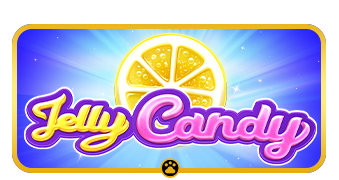
Jelly Candy is the most compact member of the collection. Five paylines cross a 3×3 grid, combinations read from left to right and lemon Wilds help complete them. Above the main field sits an additional horizontal reel that can randomly multiply a win by up to 15x. There is no broad board, developing cell or shower of multiplier bombs. A round reveals its result quickly and gives way to the next one. The bright sweets decorate a deliberately simple classic structure.
Candy Stars expands the field to 5×3 and starts a tumble after every win: paying symbols disappear and replacements enter the gaps. Sticky Wilds can land along the upper row, remain in place and add 1x whenever they participate in another win. Three diamonds award eight free spins, where a sticky Wild can double after each successful hit up to 128x. The screen stays easy to read, but the sequence now has memory. Jelly Candy and Candy Stars mark the move from an immediate result to an escalating chain.
Sweet Bonanza cares about quantity, not adjacency
Sweet Bonanza uses a 6×5 field and pays when eight or more matching symbols appear in any positions. They do not need to touch as Sugar Rush clusters do; only the total count matters. Winning sweets disappear and a tumble can create another qualifying group. During free spins, multiplier bombs join a successful sequence and their values are combined before being applied. The rhythm has two requirements: enough paying symbols first, then a useful bomb before the chain stops.
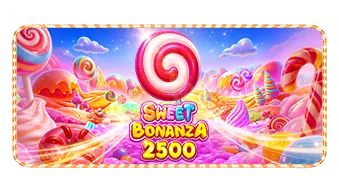
Sweet Bonanza 2500 intensifies that second layer. Four lollipops award ten free spins, where bombs reach 2,500x and remain until the current tumble chain ends. All visible values are then added and applied to the win; three more lollipops extend the feature by five spins. Sweet Bonanza 1000 and the Christmas edition change limits and scenery but retain the familiar 6×5 anticipation. This family prefers a sudden sum of multipliers to the slow cultivation of one position.
Super Scatter adds a second ending to familiar tumbles
Sweet Bonanza Super Scatter keeps groups of 8–12 or more symbols in any parts of the grid. Ordinary Scatters trigger ten free spins, where multipliers of up to 100x can appear and three additional Scatters award another five spins. The new feature does not erase the established rhythm: sweets still need to form sufficient mass, disappear and leave room for another drop.
The Super Scatter scale supplies separate tension. One rare symbol pays 100x, two pay 500x, three pay 5,000x and four pay 50,000x. These amounts do not need to be developed through cascades; the symbol count states the award immediately. The game holds two possible climaxes at once: the accumulated bomb total in a live winning sequence and the instant reward from the rare icon. Super Scatter feels like more than another sugary edition because it adds an abrupt full stop to a mechanic that usually wants to continue.
Sugar Rush develops the board rather than a bomb
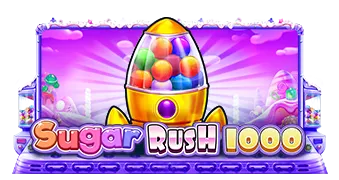
Sugar Rush forms clusters of at least five adjacent sweets on a 7×7 grid. Paying symbols vanish and mark the cells beneath them; a later win on the same position develops its multiplier. In Sugar Rush 1000, repeated hits double a cell from 2x as high as 1,024x. Marked areas remain during free spins, so a productive zone keeps drawing attention after the original cluster ends. The board becomes a map of places where new groups are especially welcome.
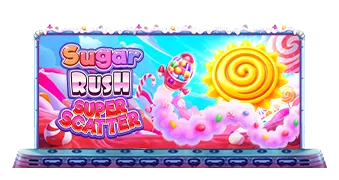
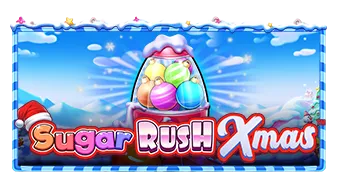
Sugar Rush Xmas moves this logic into a Christmas sweet shop, while Sugar Rush Super Scatter adds alternative trigger conditions and a separate rare symbol. The family remains recognisable through its memory of cells. Sweet Bonanza waits for the sum of bombs that manage to enter a living cascade; Sugar Rush relies on the geography of previous hits. Both use sweets and falling symbols, but one hopes for an enhancer from above while the other slowly constructs value underneath.
Candy Rush grows an area; Candy Blitz Bombs grows a counter
Candy Rush also plays on 7×7 and pays clusters of five or more, but it develops a multiplier zone rather than isolated cells. The area can range from 2×2 to the entire 7×7 field, and every winning cascade through it doubles the value from 2x up to 128x. Three to seven Scatters award 10–30 free spins with a guaranteed multiplier area in every round, while Super Free Spins can cover the whole board. The suspense lies in how much useful territory becomes active.
Candy Blitz Bombs uses 6×5 and pays for eight matching symbols anywhere. Every successful drop increases an additional multiplier reel by 1x, and bombs from 1x to 500x feed the same counter. Base-game progress resets when the tumble chain ends; during free spins, accumulated multipliers remain until the feature finishes. Candy Rush visualises strength as surface area, Candy Blitz Bombs as a rising total. Their identical confectionery colours conceal two different ways of measuring acceleration.
Powernudge makes the winning part of the field move
Sweet Powernudge works on a 6×5 field. After a win, every reel containing at least one paying symbol nudges downward and reveals new icons. The fifth reel carries multiplier values, while four Scatters award seven free spins with an active multiplier counter. Continuation does not come from the whole grid freely tumbling at once. It depends on which reels participated in the win and received another step.
Sugar Supreme Powernudge moves the idea to 6×6 and clusters of at least five symbols. Winning reels also shift, while occupied positions receive multipliers that begin at 1x and rise by one after a fresh landing. During free spins, Powernudge activates after every payment. Both games give the chain a physical direction: symbols do not merely vanish, but push a productive section of the field onward. The difference between the two systems matters far more than their shared candy coating.
Twenty-two desserts are not twenty-two identical games
Jelly Candy is the clearest fit for short, transparent rounds. Candy Stars adds sticky Wilds and escalating tumbles to a small grid. Sweet Bonanza and its editions build climaxes around pay-anywhere wins, cascades and bombs; Sugar Rush builds them around cell memory. Candy Rush develops a multiplier area, Candy Blitz Bombs collects a shared counter, and the two Powernudge titles move winning reels. Candy Corner, Candy Jar Clusters, Sweet Kingdom and the remaining games offer further variations on the cluster sweet shop.
The collection has an obvious weakness: visually, its games can blur together. Pink icing, gummy bears and lollipops repeat more often than genuinely new rule sets, while a festive edition sometimes changes the mood more than the mechanism. The theme still helps expose contrasts when attention moves from decoration to rhythm. A short payline, tumble, marked cell, sticky Wild, growing zone or shared multiplier counter: that internal pattern decides whether a candy slot feels like a quick sweet or a layered dessert that takes time to unfold.